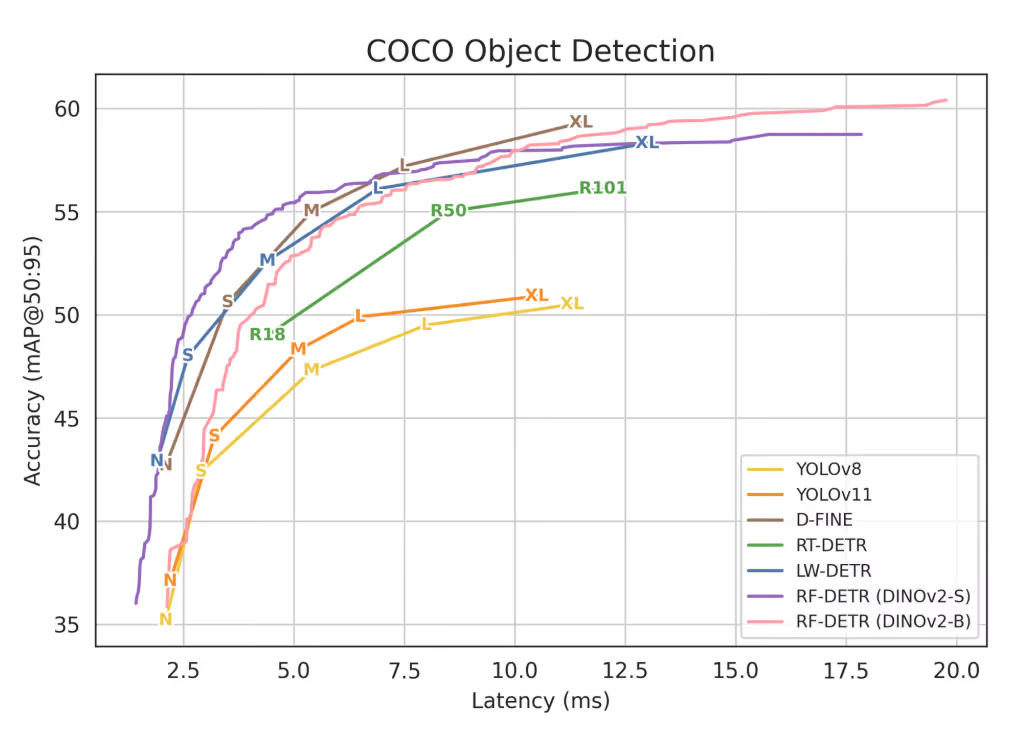
YOLOv8 is a computer vision model architecture developed by Ultralytics, the creators of YOLOv5. You can deploy YOLOv8 models on a wide range of devices, including NVIDIA Jetson, NVIDIA GPUs, and macOS systems with Roboflow Inference, an open source Python package for running vision models.
Here’s what would make a useful feature in a video processing/upload tool (e.g., CLI tool like ffmpeg , youtube-upload , or a custom script): 1. Batch upload with libvpx re-encoding Automatically re-encode videos to libvpx (VP9) before uploading.
It sounds like you're looking for a feature or command related to a file, specifically something like s01 (possibly a segment or episode) encoded with libvpx (the VP8/VP9 codec).
Here’s what would make a useful feature in a video processing/upload tool (e.g., CLI tool like ffmpeg , youtube-upload , or a custom script): 1. Batch upload with libvpx re-encoding Automatically re-encode videos to libvpx (VP9) before uploading.
It sounds like you're looking for a feature or command related to a file, specifically something like s01 (possibly a segment or episode) encoded with libvpx (the VP8/VP9 codec).
You can train a YOLOv8 model using the Ultralytics command line interface.
To train a model, install Ultralytics:
Then, use the following command to train your model:
Replace data with the name of your YOLOv8-formatted dataset. Learn more about the YOLOv8 format.
You can then test your model on images in your test dataset with the following command:
Once you have a model, you can deploy it with Roboflow.
YOLOv8 comes with both architectural and developer experience improvements.
Compared to YOLOv8's predecessor, YOLOv5, YOLOv8 comes with: upload s01 libvpx
Furthermore, YOLOv8 comes with changes to improve developer experience with the model. Here’s what would make a useful feature in